San Fran’s All Inclusive Resort Bar for Homeless Alcoholics
-January 26, 2026
Bad ideas are inevitable in any political system. What separates functional governance from dysfunction is not whether foolish proposals appear, but whether institutions possess the competence to evaluate them and the accountability to stop them. San Francisco’s Managed Alcohol Program (MAP) exposes what happens when both disappear — when logic collapses, oversight fails, and taxpayer money quietly sustains a policy that could not survive honest scrutiny.
This was not an isolated lapse. It was the predictable result of a system no longer capable of governing itself with discipline.
Launched in 2020 during the COVID pandemic, MAP was framed as a public-health intervention for chronically homeless individuals suffering from severe alcohol addiction. Its stated goal was not sobriety or recovery, but “harm reduction”: reducing withdrawal risk and emergency medical use by providing scheduled doses of alcohol under clinical supervision. What began as a 10-bed pilot eventually expanded to roughly 20 beds and operated out of a former hotel in San Francisco’s Tenderloin's district on Eddy Street.
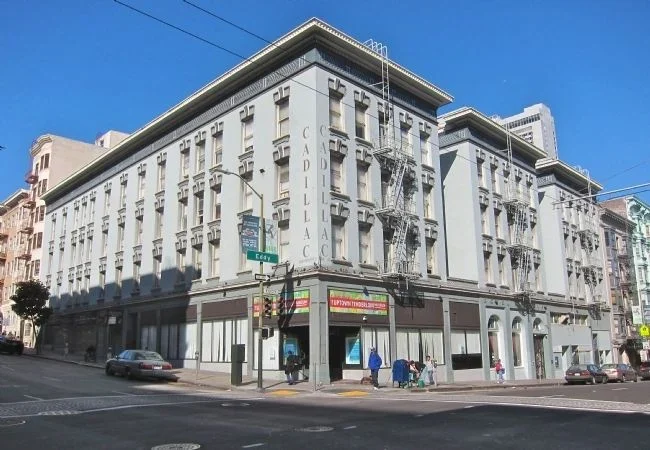
Stripped of euphemism, the policy was simple. The city used taxpayer funds to house alcoholics, feed them, staff their facility, provide medical oversight, and administer beer and vodka on a schedule — indefinitely.
Participants received private rooms, three meals a day, on-site medical and behavioral health services, case management, transportation support, and 24/7 security. Alcohol was not incidental. It was central — documented, scheduled, and dispensed by staff as part of individualized “care plans.”
This is where the logic collapses immediately.
If addiction is a medical disorder requiring treatment, then subsidizing the addictive substance itself is not harm reduction — it is contradiction. Alcohol received an exemption not because the reasoning was stronger, but because cultural familiarity made the absurdity easier to obscure.
That obscurity was not accidental. “Managed Alcohol Program” is not a neutral description; it is bureaucratic anesthesia. It transforms “taxpayer-funded alcohol for alcoholics” into something that sounds like a technical pilot rather than a moral and fiscal choice. Had the city introduced this policy in plain English — through explicit votes and open debate — it would not have survived a single budget cycle.
Instead, it arrived quietly, folded into pandemic emergency spending and routed through the San Francisco Department of Public Health. Operations were handled through nonprofit contracts under cost-reimbursement structures that paid for staffing, meals, security, alcohol procurement, and facility operations. Once embedded inside a homelessness budget measured in the billions, the roughly $5 million per year cost all but disappeared from public view.
The funding was real. City records show MAP drew primarily from the General Fund, supplemented at times by homelessness funding streams such as Proposition C. Federal pandemic funds helped cover hotel conversions early on, but local taxpayers ultimately paid for ongoing operations, regardless of utilization or outcomes.
Over roughly four years, the program served about 55 individuals. Even conservatively, that implies hundreds of thousands of dollars per participant per year. And yet, despite the expense, the program explicitly disclaimed recovery as a goal. There was no expectation of sobriety, no requirement to pursue treatment, no timeline for transition, and no meaningful exit criteria.
Success was instead redefined downward. Officials pointed to reductions in emergency room visits and ambulance calls. These are not outcomes; they are utilization metrics. They measure system efficiency, not human improvement. A policy that cannot articulate what success looks like beyond “fewer emergency interactions” is not merely flawed — it reflects institutional incompetence.
MAP did not emerge in isolation. By the time it launched, San Francisco had already embraced a broader philosophy in which the state facilitates ongoing substance use in the name of harm reduction. The city supported supervised drug consumption sites where users brought their own illegal drugs to use under observation. It funded widespread distribution of drug paraphernalia to enable continued use “more safely.” City leaders openly discussed “safe supply” models modeled on Canada, even where implementation remained legally constrained.
MAP was simply the point where that philosophy crossed from supervision into direct administration — made possible only because alcohol is legal. What could not be done openly with fentanyl or meth was quietly done with beer and vodka.
In a competent, accountable system, this program would have been stopped repeatedly. It should have failed basic policy evaluation the moment recovery was excluded as a goal. It should have triggered ethical review for administering addictive substances under government authority. It should have failed cost-benefit analysis given its extraordinary per-person expense. It should have required explicit reauthorization once pandemic emergency powers expired. And it should have been terminated for lack of outcomes long before five years elapsed.
It survived none of these checks because those checks effectively no longer exist.
The most revealing part of MAP is not how it began, but how it ended. No one was fired. No one resigned. No one was disciplined. No funds were repaid. There was no audit-driven reckoning, no public acknowledgment of failure, no admission that taxpayer money had been poorly spent. The program was quietly “restructured” and absorbed elsewhere, and the system moved on.
Everyone involved was paid.
No one bore consequences.
This is not an allegation of criminal corruption. It is something more corrosive: a system in which failure carries no penalty and success is never required. Public health officials retained their careers. Administrators kept their positions. Nonprofit operators continued to receive stable, reimbursed funding. Contractors were compensated as agreed. Some people made comfortable livings managing failure — not through fraud, but through permanence.
In any other sector, this would be unthinkable. A corporate program that burned millions while disavowing results would trigger terminations and clawbacks. A hospital initiative that administered addictive substances indefinitely without recovery benchmarks would provoke ethics investigations and leadership changes. In San Francisco’s homelessness governance ecosystem, it produced career continuity.
Once this program came into public view, an unavoidable question followed: if this survived quietly for more than five years, what else exists that has never been translated into plain English? Modern municipal budgets rely on broad moral categories, emergency carryovers that never sunset, and nonprofit contracts evaluated largely by their own operators. Under those conditions, misappropriation does not require malice — only abstraction, poor oversight, and no accountability.
That is the real scandal exposed by the Managed Alcohol Program. Not compassion. Not intent. Governance failure.
The program did not survive because it worked.
It survived because no one was held responsible for asking whether it did.
And when satire becomes the only effective accountability mechanism left, the joke is no longer the policy.
The joke is the system that produced it.