The Skubal Problem
-Dec 4, 2025
How baseball’s promise is slipping away — and why the Tigers’ greatest hope may already belong somewhere else.
Tarik Skubal throws a baseball in a way that doesn’t seem fair. His fastball rises as if it never learned gravity, his changeup floats like deception itself. Detroit drafted him. Detroit developed him. Detroit believed in him when the rest of baseball wasn’t sure.
He is exactly the kind of miracle small-market fans are told to wait for — the story that keeps hope alive during the cold months and the losing streaks. A homegrown ace. The first true pillar of a renaissance.
And yet, everyone knows how this story usually ends.
That inevitability is the problem.
Not the player.
The system.
Baseball loves to call itself a meritocracy — 162 games to prove who you are. No clock, no shortcuts. Earn everything. But beneath that romance is a financial structure that decides, long before Opening Day, which dreams are affordable.
In modern MLB, money doesn’t guarantee excellence — but it guarantees the right to keep trying until excellence arrives. You can spend your way out of mistakes, buy insurance for slumps, replace the players who don’t pan out, and retain the ones who do. Wealth covers error.
Teams like Detroit don’t get that luxury.
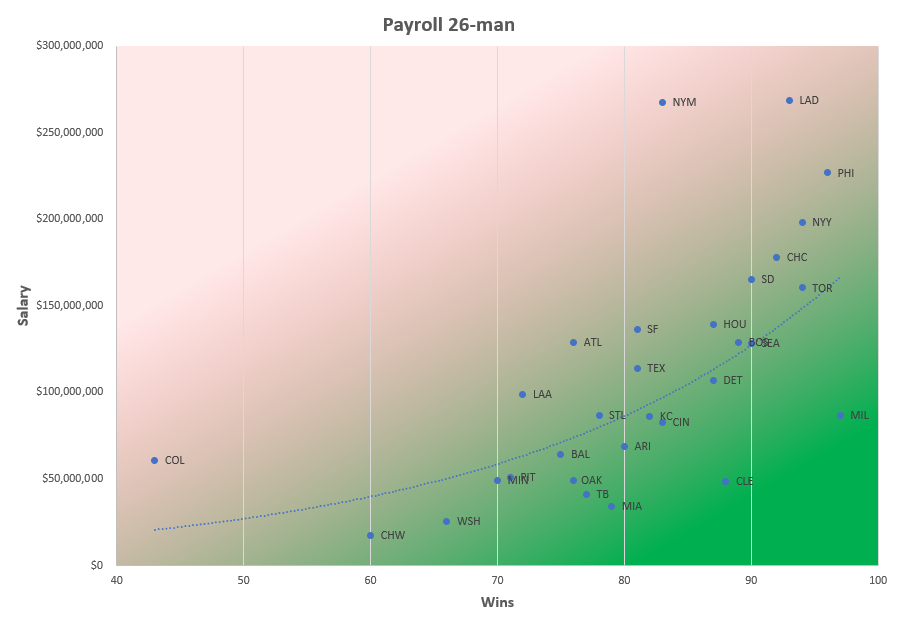
At the top of the curve sit the Dodgers, Yankees, Mets and Phillies — spending more than double Detroit’s roster cost. Their floor is competitiveness. Their ceiling is parades.
At the bottom, teams like the Tigers live in a different sport. They must be brilliant early, lucky often, and heartbreaking eventually.
And it’s not just about this year.
It’s about what happens when greatness becomes expensive.
A $30 million ace is 9% of the Dodgers’ payroll.
For Detroit, it’s more than 20%.
For Cleveland, 30%.
For Kansas City? Impossible.
The Tigers can discover the next Skubal.
They can’t guarantee fans will ever see his prime in a Detroit uniform.
In the sport that glorified parity, geography is now destiny.
It wasn’t always like this. Baseball once stood apart from the big-market tyranny that ruled the NBA or the Premier League. The Royals could rise from nowhere. The Twins could build a dynasty on scouting. Even the Tigers, within recent memory, could buy Cabrera and Verlander and Scherzer — and almost get the crown.
But ownership changed.
Broadcast economics changed.
The cost of fixing mistakes exploded.
Baseball implemented a luxury tax meant to restore balance.
Instead, it became a permission slip for the wealthy:
Pay the fee. Keep the dynasty.
And revenue sharing?
It made small markets dependent, not competitive.
Big cities build empires.
Small cities build prospects for those empires.
Here’s the hypocrisy we pretend not to see:
The three cities most associated with public calls for equity and fairness —
Los Angeles, New York, Chicago —
operate baseball organizations rooted in extraction economics:
- consolidate the resources
- collect the stars
- purchase the outcome
They condemn inequality in public life.
They celebrate it in the game they love most.
Social justice everywhere —
except the ballpark luxury suites.
It’s selective morality:
advocate equality where it costs nothing.
Cheer inequality where it buys a title.
Meanwhile, cities like Detroit are asked to be grateful.
Grateful for a temporary hero.
Grateful for a fleeting chance.
Grateful for the role of stepping stone.
Baseball markets that can least afford heartbreak
are the ones asked to endure it most.
MLB insists everything is working:
Record revenue!
Record TV deals!
Game 7 smashing global viewership!
But the projection screens hide the rot:
- The average fan is nearing 60
- Attendance has stagnated
- National interest only spikes when the wealthy collide
- The sport’s visibility shrinks while its costs rise
MLB isn’t growing.
It’s harvesting.
It extracts passion from Detroit and Cleveland and Pittsburgh…
then exports the payoff to the coasts.
Detroit isn’t a rival to Los Angeles.
Detroit is a supplier.
The richest teams don’t just acquire stars.
They absorb meaning.
And that is the real crisis.
Baseball’s most precious resource
isn’t talent
or markets
or revenue.
It’s belief
— the belief that what you’re cheering for could become real.
Take away belief, and fans will give their hearts one last time…
…and then stop giving them at all.
Heartbreak is survivable.
Apathy is terminal.
If MLB continues to mistake profits for relevance —
if it keeps designing October as a showcase for the wealthy —
if teams like Detroit remain the proving grounds for someone else’s heroes…
There will come a day when even a miracle like Tarik Skubal
isn’t enough to keep us watching.
Detroit Epilogue:
We Don’t Want Miracles. We Want a Chance.
Detroit isn’t asking for a dynasty.
We’re not asking for a guarantee.
We’re asking for a fair shot.
A season where greatness isn’t a countdown clock.
A future that isn’t pre-sold to the coasts.
A reason to believe — and keep believing.
Keep Skubal.
Keep the hope he represents.
Prove that baseball doesn’t only belong to the richest postal codes in America.
Because if the league won’t protect its smallest markets, it’s not worth asking fans to keep paying the price.